How Many Cavities Is Normal for an Adult?
Almost 90% of American adults have had a cavity at some point, and the average adult has 8.6 teeth that are decayed, missing or filled. That is a lifetime total. At any single moment the average is under one tooth with active decay. So being told you have six at once is well above average, and worth understanding rather than simply accepting.
If you have just been told you have six cavities, you are probably sitting somewhere between embarrassed and suspicious. Both of those are fair, and I see both across the chair most weeks. The trouble is that the number by itself sounds like a verdict on how well you have been looking after yourself, and nothing about it tells you whether it is ordinary or alarming.
The question is really two questions
How many cavities have you ever had, and how many do you have right now. These get answered with the same word and they are nothing alike.
Your dental record counts both. A tooth filled when you were nineteen still shows up in the lifetime tally at forty. That tally climbs for everyone and never falls. The count that matters today is much smaller and much more specific: how many teeth have active decay in them at this moment.
What the numbers actually say
The US national survey data separates the two, and the gap between them is the whole answer.
Nearly 90% of American adults aged 20 to 64 have had decay in a permanent tooth at some point. Broken down by age, that is about 82% of people aged 20 to 34, around 92% by 35 to 49, and roughly 96% by 50 to 64. Having had cavities is close to universal.
The average adult has 8.6 teeth that are decayed, missing or filled. Six of those are filled and two are missing. The number actively decayed, right now, averages 0.7 teeth.
So the honest answer to "how many cavities is normal" is somewhere near one at a time, and quite a lot over a lifetime. Six at once sits well above the average.
Why six at once is still perfectly possible
Above average is a long way from impossible, and there are ordinary reasons this happens.
The most common one is time. If it has been six or seven years since anyone looked, you are not being shown this year's decay. You are being shown several years of it arriving at once.
Dry mouth is the one people never suspect. Saliva is the mouth's own repair system, and hundreds of common medications reduce it, including many antidepressants, antihistamines and blood pressure drugs. Take saliva away and decay speeds up everywhere at the same time, which is exactly what produces a long list.
Frequency of sugar matters more than quantity. Someone sipping one sweetened coffee across three hours gives their teeth a harder time than someone who eats a dessert in ten minutes. Acid reflux does something similar from the other direction.
A list of six is a pattern, and patterns have causes. Finding yours is far more useful than arguing about the count, and it is usually the part of the conversation people are never offered.
The question that changes everything
Not all cavities are the same size, and the difference is not cosmetic. It decides the treatment.
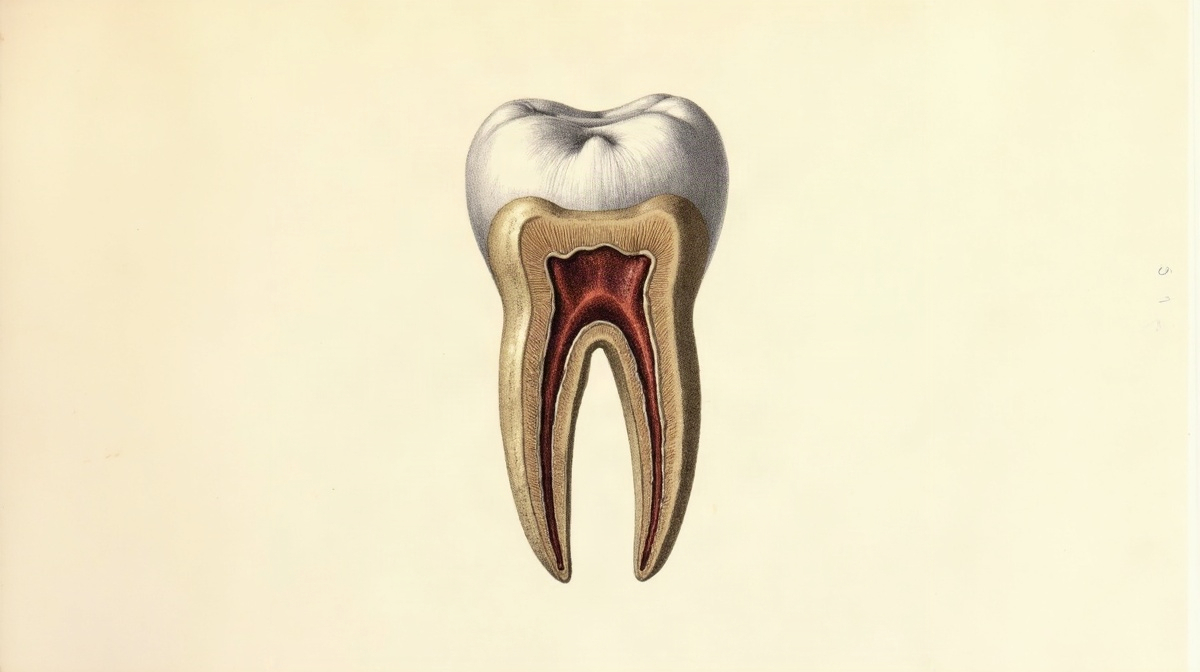
Enamel is the hard outer shell. Decay that has not yet passed through it can stop, and can partly reverse, because minerals move back into the surface. The ADA is explicit that the old approach of drilling and filling everything "does not address the full continuum of the caries disease process", and its 2018 guideline sets out treatments for lesions that do not need restoring at all.
Once decay reaches the dentine underneath, that stops being realistic. Dentine is softer, and decay travels through it faster than it travelled through enamel.
This is why six shallow enamel lesions and six deep dentine ones are completely different situations that produce the same sentence in the chair.
What to ask
Four questions, and they take about a minute.
- How deep is each one? Ask whether any are still confined to enamel.
- Which are cavitated, meaning the surface has actually broken?
- Can we treat the deep ones now and watch the shallow ones?
- What do you think caused this many at once?
Anyone who has looked at each tooth properly will enjoy answering these, because it is the interesting part of the job. If the answers stay vague, that is worth noticing.
None of this applies if a tooth is already hurting, keeping you awake, or the gum around it is swollen. That needs seeing quickly, and it is not the situation this article is about.
What I would want you to take away
Six is above average, and it is not proof of anything in either direction. Please do not read it as a character assessment. I have seen careful people with a long list and cheerfully careless ones with none, and the difference is usually saliva, medication or how long it has been since anyone looked.
The number on its own tells you very little. The depth of each lesion, whether the surfaces are actually broken, and what changed in your life to bring several along at once will tell you nearly everything. Those are all answerable, and once you have the answers the plan tends to make itself obvious.
Common questions
- Is 6 cavities a lot for one visit?
- It is above average. US survey data puts the average adult at 0.7 currently decayed teeth at any given time. Six is unusual enough to be worth asking why, and worth asking how deep each one is, though it is not evidence that anyone has made a mistake.
- How many cavities does the average adult get per year?
- There is no reliable per-year figure, because decay does not arrive on a schedule. The more useful number is the lifetime one. By ages 20 to 34 about 82% of US adults have had decay, rising to roughly 96% by ages 50 to 64.
- Can a cavity go away on its own?
- A lesion still confined to enamel can remineralise and stop. Once decay has passed into the dentine underneath it generally will not reverse. This is why the depth of each lesion matters more than the number of them.
- Should I get a second opinion if I am told I have several cavities?
- Asking how deep each lesion is, and whether any are still confined to enamel, will usually tell you more than a second opinion would. If the answers are vague, seeing another dentist licensed where you live is reasonable.